Did you know that approximately 66 million years ago, an asteroid about 10 to 15 kilometers in diameter collided with the Yucatán Peninsula in Mexico?
The End of an Era
The energy released was equivalent to billions of atomic bombs, causing a global “impact winter.” Dust and aerosols launched into the atmosphere blocked sunlight, leading to a collapse of photosynthesis and, ultimately, the extinction of 75% of the planet’s species, including non-avian dinosaurs.
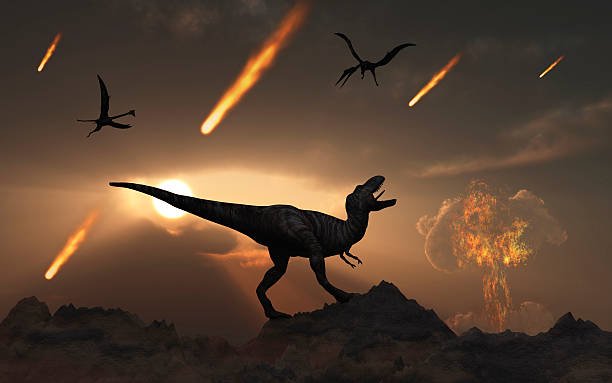
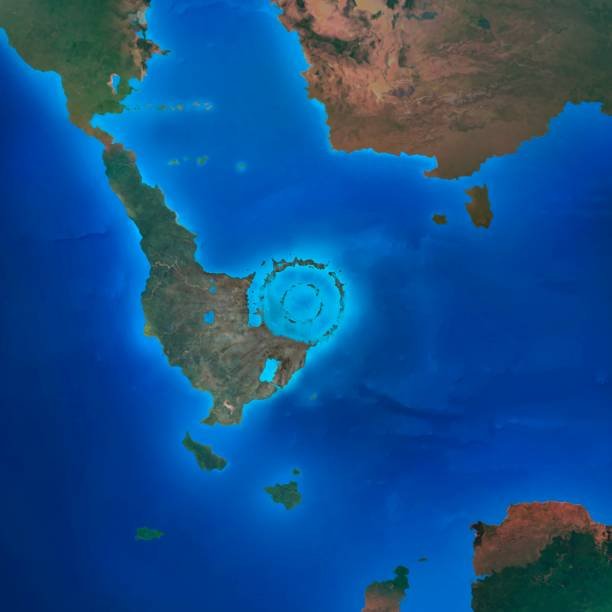
The last days of dinosaurs during the Cretaceous Period, caused by a giant asteroid impact at Chicxulub off the coast of Mexico.Illustration of the Chicxulub crater, shortly after its formation. This crater was formed 66 million years ago, off the coast of present-day Mexico, following the impact of an asteroid 10-14 kilometres across. The asteroid is widely believed to have provoked the extinction of the dinosaurs and other species at this time. The crater measures some 150 kilometres in diameter. Since its formation it has been buried in silt and covered by the sea, and is now only detectable using gravity measurements of the immediate area.